Introduction
As the world becomes increasingly aware of the impact of fossil fuels on the environment, the shift towards electric vehicles (EVs) is accelerating. This shift is not just a trend; it is a crucial step towards a sustainable future. The data presented here gives us a snapshot of the electric vehicle landscape, revealing not only preferences and performance but also pointing towards where the industry is heading.
The Electric Frontier: Range Rulers and the Quest for Distance
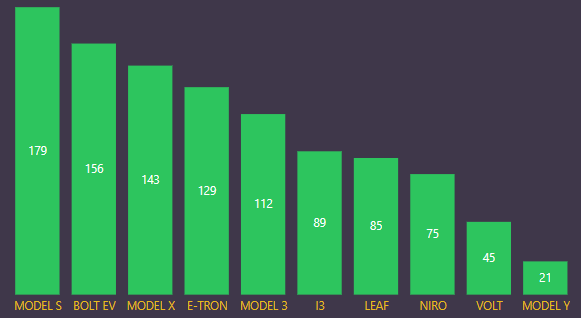
The electric vehicle models currently on the roads exhibit a wide range of electric range capabilities. The Tesla Model S leads the pack with an average electric range of 178.94 miles, making it a favorite for those looking for distance on a single charge. Following closely are the Chevrolet Bolt EV and Tesla Model X, with average ranges of 156.31 and 142.58 miles, respectively. On the lower end, the Nissan Leaf and Kia Niro offer modest ranges, suitable for urban commuting and short trips. The Tesla Model Y, despite its popularity, shows an average range of only 20.7 miles, which could indicate a niche use or a larger presence of early, less efficient models still in use.
Manufacturers’ Mileage Marathon: Leading the Charge in EV Innovation
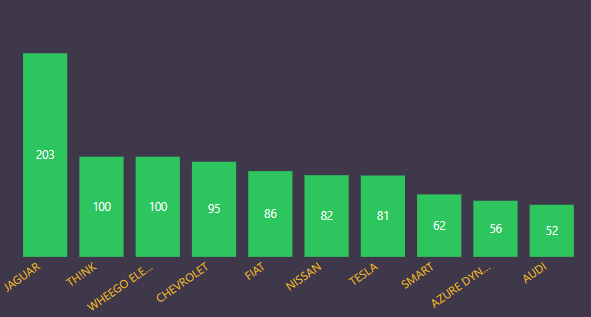
When we look at the average electric range by manufacturer, Jaguar impressively leads with 203.29 miles, suggesting a focus on performance and long-range capabilities in their EV offerings. Surprisingly, niche manufacturers like TH!NK and Wheego Electric Cars hit the 100-mile average mark, indicating that smaller companies are also capable of delivering competitive electric ranges. The American automaker Chevrolet and the Italian automotive brand Fiat show strong performance as well, while Tesla’s broad range of models averages out to 81.22 miles, underscoring its dominance in the EV market.
The BEV Boom: Consumers’ Clear Choice for a Cleaner Drive
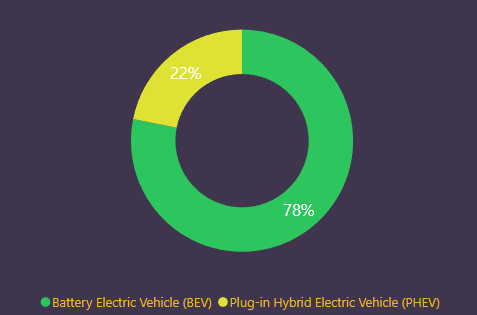
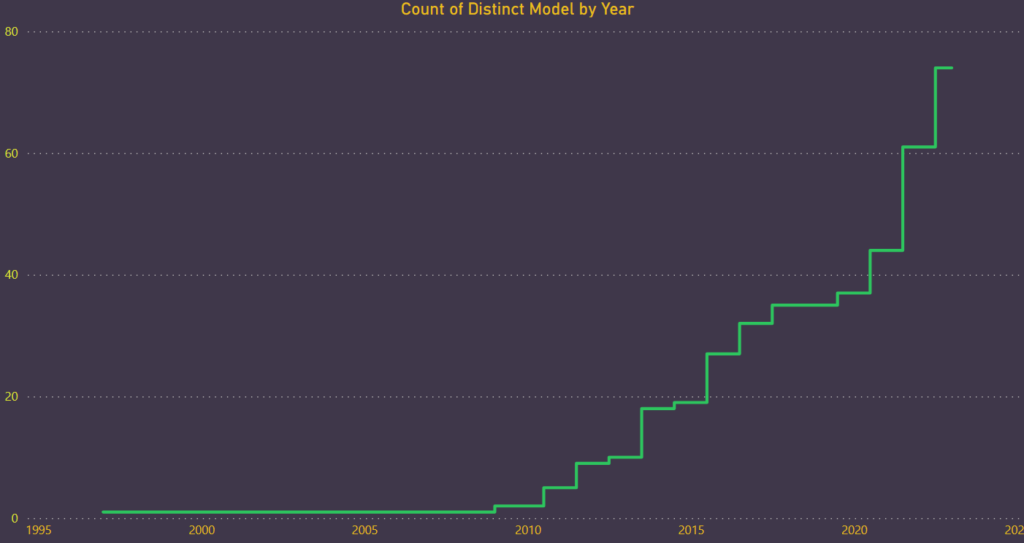
The data also reveals the prevalence of electric vehicle types, with Battery Electric Vehicles (BEVs) vastly outnumbering their Plug-in Hybrid Electric Vehicle (PHEV) counterparts, indicating a strong market preference for purely electric drivetrains over hybrid ones. This trend is further corroborated by the increasing count of EV models released each year, with significant growth seen from 2010 onwards, reaching a peak in the most recent years.
Mapping the Electric Dream: Regional Leaders in EV Adoption
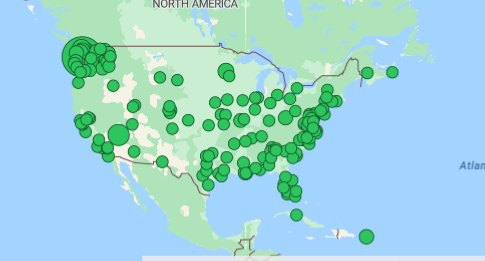
From a geographic perspective, the county of King shows the highest adoption of electric vehicles, hosting 86,594 units, dwarfing other counties like Snohomish and Pierce. This regional distribution could be influenced by various factors, including charging infrastructure, economic affluence, and local policies supporting EV adoption.
The Road Forward: Accelerating Towards an Electric Future
In summary, this data paints a picture of a rapidly growing and evolving electric vehicle market. Consumers are increasingly favoring vehicles that offer greater electric range, indicating a desire for EVs that can match or exceed the convenience of traditional internal combustion engines. Manufacturers are responding to this demand, with various brands emerging as leaders in different segments of the market.
As policymakers and consumers continue to push for cleaner, more efficient transportation, the electric vehicle market seems poised for further growth. The provided data is a beacon for where the industry is currently and a compass for where it is going. It shows the potential for innovation and growth, and ultimately, it shows that the road to a sustainable future is becoming more accessible by the day.